
Blight-battlers helps keep Napa wine country clean | Local News Leave a comment
Some people trash Napa County’s world-famous rural wine country and others clean it up.
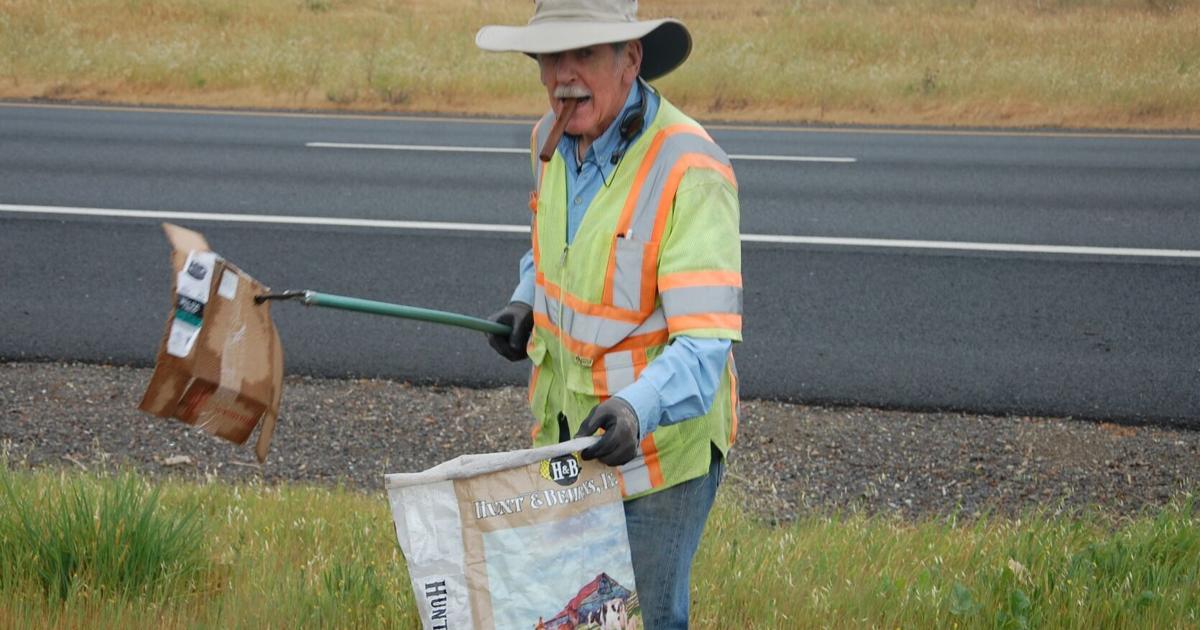
Michael Haas is among the volunteer cleaner-uppers. He can often be seen along the Napa Valley Vine Trail between the city of Napa and Yountville picking up trash with a metal grabber. His working gear includes a reflective vest and a wide-brimmed hat.
Support local news coverage and the people who report it by subscribing to the Napa Valley Register. Special offer: Subscribe for $5.99 per mo…
“I clean up litter because it’s unsightly; it’s unhealthy,” he said on a recent day as he began his rounds. “I want to clean up the area and make it look more beautiful.”
Beautiful is what wine country is all about. A crumpled fast-food bag tossed on the ground near a vineyard strikes at the heart of what Napa County sells itself as to the greater world.
“Napa Valley, California is the epitome of beautiful wine country scenery and legendary world-class wine,” says a Visit Napa Valley blurb.
Trash is more than a visual blight. According to Keep American Beautiful, it can injure wildlife, reduce property values, impact whether a business locates in a community and reduce tourism revenues.
People are also reading…
In general, locals and visitors traveling through Napa County wine country see vines, not garbage. People such as Haas are working to keep it that way.
Haas has a title for himself — The Blight Fighter.
He came to Napa County in 1997 and worked at Pahlmeyer Vineyards. He became a beverage alcohol compliance consultant.
By 2014, he was having difficulty with nerve pain in his leg. He ultimately had back surgery and retired. His therapist suggested he go for walks.
“Before long, I was walking a couple of blocks with no real pain,” he said. “Of course, you walk anywhere, you see litter. I started picking it up. I started bringing a bag with me.”
He’s an official litter-remover for a stretch of a few miles, so recognized by the county’s Adopt-a-Roadside program. Two blue signs along Solano Avenue near Napa and Yountville say, “Litter control provided by Michael Haas.”
Haas doesn’t shirk. He’s usually on the volunteer job at least five days a week, going out for three hours or more at a time. He’s found everything from watches to wallets. He found $12,000 in checks and returned them to the owner.
Once when he was out on his walk in about 2015, a man gave him a metal grabber so he wouldn’t have to bend over to pick up litter.
“I’m on my fourth one now. I wear them out,” he said.
With all of that litter removal Haas does day after day, one might think he’d have trouble finding trash. In fact, the stretch of Vine Trail to a casual observer on a recent day looked fairly pristine. But Haas looked closely and found a piece of cardboard amid the weeds.
“It’s always there,” he said.
A trash hot spot
Resident Craig Vega is also among the volunteer cleaners. He finds everything from tires to fast food wrappers to what appears to be old sleeping bags amid the vegetation lining Foster Road near Golden Gate Drive.

Some of the trash on a recent day was in a ditch that runs into a culvert. Garbage there could eventually wash into south county wetlands and waterways.
One reason he moved to Napa four years ago is he was tired of the crime and trash in Oakland, Vega said. As it turned out, he escaped the big city but not the trash.
“It’s disheartening,” he said.
Vega has taken action. He’s filled his pickup truck with old appliances, tires and trash a couple of times and brought the load to the Devlin Road transfer station — what amounts to the south county’s dump. That costs him a $40 fee at the transfer station each time.
“It’s not a lot of money, but it’s my own money,” he said.
He’s also approached Napa County government about the dumping problem. After some initial frustrations, he’s seen progress.
A flashing message sign went up on Foster Road that says, “Dumping is illegal” and “You will get caught.” Then the sign flashes the California penalties for dumping waste of $250 to $1,000 for the first conviction.
He’s working with the Sheriff’s Office on forming a Neighborhood Watch group.
Rural Foster Road is popular with walkers, runners and cyclists from the city of Napa about a mile away. People can often be seen going down the steep hill on Foster Road before rounding the corner to Golden Gate Drive and the property with the Dutch Belted cows.
A Neighborhood Watch group would help the passersby to be litter lookouts or dumping detectives. They could watch for people dumping garbage and make reports to the county.
A county report from years ago explained how such a group can work. That included looking through trash for clues to the dumper’s identity, doing the cleanup and seeking reimbursement costs in court.
Rural residents who want to try the Neighborhood Watch approach can contact the Sheriff’s Office Problem-Orientated Policing Program. Its purpose is to address quality-of-life issues, such as illegal dumping.
Having the neighborhood involved is important, Sgt. Ozzy Hernandez said. Residents can do such things as report dumping incidents or a suspicious vehicle driving up and down the street with a full bed of trash.
“No one knows their neighborhood any better than the people themselves,” Hernandez said.
People can contact the Problem-Orientated Policing Program at POPP@countyofnapa.org or 707-253-4280.
County response
Napa County Public Works Director Steven Lederer said illegal dumping is getting to be a bigger problem every year in rural areas. The garbage includes furniture, mattresses, televisions and hundreds of bags of trash.
“Most litter comes from everyday residents, trash that blows out of the back of pickups, waste from food, etc.,” he said. “Larger items generally come from residents who simply have large items and don’t want to go to the dump.”
Napa County’s response to illegal dumping in rural areas comes on several fronts.
The county’s Roads Department does some cleaning in the right-of-way of county roads, as time allows. That comes with a price for taxpayers.
From July 1, 2021 to Jan. 31, 2022, the road department spent 352 person-hours, $39,146 in labor, $4,260 in equipment charges and $13,000 in disposal fees to remove trash, Lederer said.
The county has hired the California Conservation Corps of the North Bay to pick up litter along various roads north of Yountville twice weekly. Corps members have worked primarily on the valley floor. The cost is close to $100,000 annually, he said.
Napa County is working on a similar California Conservation Corps arrangement for the south county.

Finally, franchise waste haulers Napa County Recycling and Waste Services and Upper Valley Disposal Service pick up some waste deposits, Lederer said. Haulers also offer various bulky item pickups to try to keep these discards from being left along roads. Go to www.naparecycling.com for more information.
“While costs might be a factor, many of the items we find dumped can be disposed of for free, if people would just make the effort,” Lederer said.
A tough problem
Napa County is hardly the only California county with a trash problem. In neighboring Solano County, the 2020-21 grand jury took up the issue.
“Illegal dumping: is there a solution?” the grand jury titled its report.
Not really, the Solano County grand jury concluded. It recommended taking such steps as better educating residents on services offered by their local waste disposal service provider.
CalRecycle has a number of suggestions to combat illegal dumping. Among them are having surveillance cameras at dumping hot spots and cracking down on the “mom-and-pop” haulers that might remove waste from a property, then boost profit margins by dumping along a road.
The state also recommends posting “No dumping” signs for the clueless.
“Residents are sometimes unaware that dumping is a crime and punishable by fine and prosecution,” a CalRecycle advice sheet said.
Meanwhile, Haas does his part to keep his piece of rural Napa County clean. He’s become a familiar figure on his route to the regulars who bike and walk there. He’ll get a wave from the Napa Valley Wine Train engineer as the train passes by.
He lives in the rural Darms Lane area. This stretch of Vine Trail is his backyard, so to speak.
His task seems never-ending. Trash seems to be another constant of life, along with death and taxes. His volunteer job is secure.
“I have the bag here that I carry with me,” he said. “Inside that, I have another as a backup. And sometimes, I have both of these full of stuff.”
Loveski is a fast-casual restaurant in Napa’s Oxbow Public Market that is what the owners — husband-and-wife team Martina and Christopher Kost…
Her little sister died unexpectedly in 2021, but today Napa teen Kayleigh Lemond has something to smile about.
In December, Napans Faith Henschel-Ventrello and Steven Ventrello bought the one-story commercial condo space at 1226 Third St. in downtown Napa.
Since 1999, Debbie Stevens has held the title as Napa’s Worm Lady.
Meet Obi, Napa’s therapy pig. He’s the newest “staffer” at Mentis Napa.
A Morimoto Asia, serving pan-Asian foods, will open in the former Basalt space at the corner of Third and Main streets in Napa. No opening dat…
Redevelopment plans for the Kohl’s property in downtown Napa have taken a new turn.
Fiscal turbulence and looming staff reductions are inspiring discord among staff leaders who are taking their grievances to the college’s leadership.
As the first Black woman to be named head winemaker in Napa Valley, Victoria Coleman has been finetuning her style for over 15 years.
Napa County is looking at where it fits in with the Bay Area’s sea level rise strategies.
The vote was the second setback for the proposed charter academy, which the Napa school district vetoed in December.
Photos: take a look at blooms from The Flowry of Napa
The Flowry, the Bloomlist

Napa’s The Flowry has launched The Bloomlist, an “eco-friendly florist community.” Monkey Flower Group of Napa County (designer of this arrangement) is one of the local florists listed.
The Flowry’s Lori Diamond

Lori Diamond, founder of The Flowry of Napa.
The Flowry, the Bloomlist

Napa’s The Flowry has launched The Bloomlist, an “eco-friendly florist community.” Monkey Flower Group of Napa County (designer of this arrangement) is one of the local florists listed.
You can reach Barry Eberling at 256-2253 or beberling@napanews.com.
