
Tennis Great Smashes Barolo | Wine-Searcher News & Features Leave a comment
Rust never sleeps and neither does the wine news – get your fill with our weekly round-up.
Never mind what elite sportspeople eat, the big question is what do they drink?
Well, in the case of one of tennis’s greatest ever players, the answer would appear to be Barolo. We also look at changes in the wind for the Loire, what goes on behind the scenes at the Latin Grammys and see what happens when natural wine meets Beaujolais Nouveau.
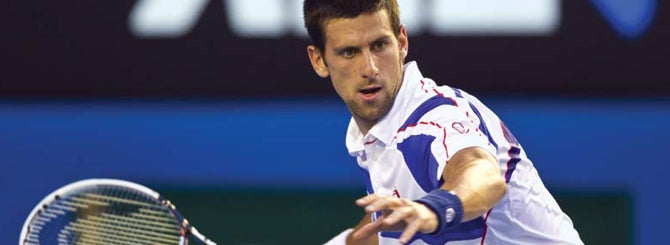
Djokovic cracks 2014 Cannubi Barolo for vegan dinner
As the ATP tennis tour descended on Turin last weekend, the first news out of Piedmont was that, while out for dinner, tennis star Novak Djokovic plumped for a strictly vegan meal in pasta palace Pastificio Defilippis in central Turin. Nonetheless, the Serbinator also reportedly paired his responsible fare with an ace bottle of 2014 Damilano Barolo Cannubi as he geared up for this week’s tennis extravaganza.
According to national broadsheet La Repubblica, Djokovic was served pumpkin cream (minus bacon) and a plate of gnocchi with artichokes seasoned with spicy oil alongside the wine. Although not a strict vegan, Djokovic is known to prefer a plant-based diet.
His ethos was perhaps a little out-of-step with local gastronomes this week as Turin courted the international spotlight. Further dining treats on offer include a “multisensory” menu created specially for the occassion by three local, Michelin-starred chefs: Davide Scabin, Maurilio Garola and Matteo Baronetto. Wineries also taking a prominent role in the celebrations include Ceretto and Damilano.
No more monovarietal Anjou rouge?
Tense times in the Loire this weekend as the winemakers of Anjou steel themselves to vote on Monday (22 November) over a proposal to cement Anjou rouge as a blended wine. The vote follows a winegrowers’ summit last Tuesday which saw heated exchanges over the suggested change.
“Some were for, others were against, but the debate was very constructive,” François Martin, head of the Anjou Rouge section of the Anjou-Saumur winemakers’ federation, told news outlet La Nouvelle République.
Nicolas Réau, a well-regarded natural winemaker in the region slammed the move, calling it “imposed”.
Current regulations state that any proportion of the two main grape varieties (Cabernet Franc and/or Cabernet Sauvignon) can exist in an Anjou red which can also contain no more than 30 percent of Pineau d’Aunis and/or Grolleau Noir (although the proportion of the latter is fixed at a maximum of ten percent).
Over 300 winemakers and vitictulturists are due to have their say. Look out for the outcome of the vote this week.
Domaine de Trévallon’s Eloi Dürrbach dies
High-profile Provençal wine pioneer Eloi Dürrbach, who established the cult minimal-intervention wine estate Domaine de Trévallon, died last week at the age of 71. Dürrbach, who started by clearing land to plant vines on his father’s estate in Saint-Etienne-du Grès, in the Alpilles, established 17 hectares (42 acres) of primarily Cabernet Sauvignon and Syrah, alongside a small portion of Marsanne and Roussanne.
According to national broadsheet Le Figaro, Dürrbach found his popularity a double-edged sword, falling out with importers and sometimes begrudging the extent of his wines’ cult status.
“Yes, it annoys me to see that my white wine is being sold for €300 [$340] in certain Parisian restaurants,” he told the newspaper. “It’s too much.”
Dürrbach began appropriating a limestone section of his father’s property in 1973. His father René, a well-known artist and sculptor in his own right, was also well-connected in the art world, befriending the likes of Pablo Picasso, Robert Delaunay and writer Jean Giono.
Indeed, René Dürrbach’s sketches produced towards the end of his life (he died in 1999) form the backdrop for many recent labels of his son’s wines. The winemaking role will likely be assumed by Eloi’s son, Antoine.
Personalized Tequila at the Latin Grammys
Long a subject of gleeful tabloid exposés, artist riders (the backstage requests) are a journalist’s traditional staple. Kanye West once requested a barber chair and a slushy machine filled with Coke and Hennessy, while Mariah Carey is fond of vases of white roses, Jo Malone candles, and a room set to 75 degrees Farenheit.
Others have been very clear in what they don’t want: Van Halen famously (and rightly) demanded all brown M&Ms be removed from the snack bowls, while Katy Perry will have any white flower arrangement as long as it doesn’t contain a single carnation.
But what of more corporate affairs? Well, backstage at the Latin Grammys this week was less rock’n’roll and more sponsored goody-bag, but there were still a few eye-openers.
Top Chilean producer Concha y Toro was handing out bottles of its Frontera Cabernet Sauvignon-Merlot, each one of which came with its own Spotify playlist. Not exactly Bollinger in Bond, but still a pretty neat idea.
Keeping with the theme of personalized bottles, Tequila producer José Cuervo was offering an engraving service for bottles of its Reposado. “The bottle of this drink can be personalized with the name or message that the person wishes,” said CNN Español.
Other, non-beverage items included a vegan shampoo, a Marias cookies gift box and a pair of specially-created perfumes by…wait for it…Mastercard.
Charlie Hebdo wine label riles police
When you think of risqué labels, its normally a teenager-esque daub of a semi-naked woman on a natural wine bottle or a frisson of true-crime drama with The Prisoner or 19 Crimes (the 20th crime, by the way, is ecological in that the matte finish on the bottles is created by a full plastic bottle wrap – wait til Greta Thunberg hears about that). You don’t, however, automatically think of a bottle of organic Bordeaux Supérieur really getting under the skin of the French police.
Step forward Gérard Descrambe who, as a long-time fan of French satirical – and sometimes satyrical – weekly publication Charlie Hebdo, has been featuring drawings by “Charb” (former controversial cartoonist for the magazine) and other contributors since 1991. This particular label of Descrambe’s Château Renaissance featured a Charb drawing of a drunk cop with a red nose saying, “the partner of my blunders”.
It turns out the French National Police Commission, having spotted the wine in a Carrefour supermarket in Nantes this week (for a criminal €7.95), did not see the funny side.
“This is an insult to the profession,” it said in an outraged tweet on Thursday, before adding: “We’re also Charlie [refering to the expressions of solidarity with the members of the editorial team, including Charb, murdered in a terrorist attack on the newspaper’s offices in 2015], we also have a sense of humor. This has nothing to do with Charb’s drawing. But police officers are attacked and threatened enough without the implication that they are making mistakes because they are alcoholics.”
For his part, Descrambe said he didn’t understand all the fuss. “Yes, it’s not politically correct but its not malicious,” he told 24-hour news broadcaster BFMTV. “But maybe they’ve got nothing better to do,” he added.
In the original tweet, the police also demanded comment from the supermarket chain, which responded asking for the precise location of the store. A move that, in itself provoked cries of censure.
However, entirely predictably, the outraged tweet elicited more than theoretical expositions on freedom of expression.
“When you do get the address, can you pass it on so that we know where to get hold of it,” asked one. “It would make wonderful Christmas presents for the whole family.”
“Where can I get three cases?” one person replied; “I’ll take 10 cases,” said another, while another wondered if the wine would be available at Carrefour City in the Paris environs and another still was hoping to snag a bottle in Marseille. “In any case,” said someone with the handle of
Bob Eero, “this publicity is going to take off.”
Duboeuf tests orange waters in Beaujolais Nouveau week
Georges Duboeuf, the Beaujolais behemoth behind the annual Beaujolais Nouveau festivities (it was last Thursday, in case you missed the potent throb of a youthful Gamay-based hangover on Friday morning) used the 2021 edition of the carbonic maceration devastation to test consumer appetite for their young-release orange wine, or Orange Nouveau or, to give it its full title: “Vin de France Orange Nouveau”.
Although the company had reportedly tried to produce the orange wine in Beaujolais itself, it hadn’t worked out.
“At first we wanted to make the wine in the [Beaujolais] region, but it turns out that Chardonnay is not suitable,” Dubœuf boss Adrien Dubœuf-Lacombe told French wine news website Vitisphere.com this week.
The 2021 wine is a multi-region blend of Grenache Blanc, Muscat and Viognier from the south of France (the source of the cuvée remains a tightly guarded secret). However, Duboeuf-Lacombe was quick to make it clear that, despite his company hitching a short ride on the orange wine bandwagon, he wasn’t all-embracing of the category.
“Orange wines can be divisive (very bitter and oxidized),” he told vitisphere.com, adding that Duboeuf was looking for a “specific identity of orange wines (with a white [wine] profile on the nose and tannic like a red [wine] on the palate), but without flaws (oxidation in particular).”
The wine was trialed in Japan in 2020 and only around 100,000 bottles of the Orange Nouveau were produced for release this year (at a reported €5 a bottle). Further cuvées are reportedly in the pipeline for future Beaujolais Nouveau days, including a sparkling edition.
Rías Baixas immune to Covid
Not our headline but that of Spanish wine website Vinetur reporting from a press conference in which the northwestern Spanish wine region’s trade body unveiled a rise of over 12 percent in export volume for Rías Baixas wines in the 2020-2021 season (August to August). Bringing in around €52 million, export value also surged by over 14 percent.
Key export destinations remain the US and UK, which account for around 2.5 million liters each. These are followed by Puerto Rico, Ireland and Holland which each take between 400,000 and 550,000 liters (530,000 to 730,000 bottles) from the homeland of Albarino.
In all, well over 12,000,000 bottles of Rías Baixas wine were distributed to over 70 countries.
“Neither the health crisis nor economic uncertainty, nor the tariffs imposed by the US administration on wines, nor the threats of Brexit, have affected Rías Baixas sector,” said the news outlet.
