
Tim Carl, Local Tastes: Health and alcohol: The gloves come off | Wine Leave a comment
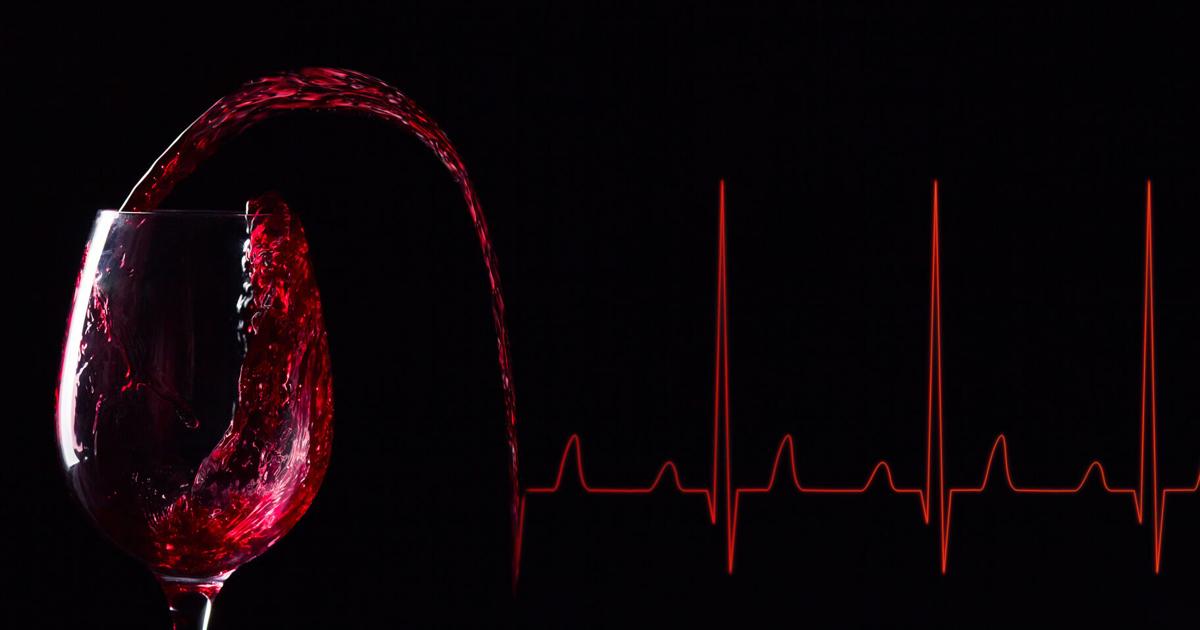
A growing choir of voices is highlighting the negative health impacts of alcohol consumption. A chorus on the other side, however, hopes to increase, or at least maintain, the consumption of alcohol. These are mostly industry and producers but also some in the medical field who desire a solution to deadly coronary heart disease.
Support local news coverage and the people who report it by subscribing to the Napa Valley Register.
With recent briefs from the World Heart Federation (WHF) and the European Parliament’s Special Committee on Beating Cancer (BECA) — stating that “there is no level of alcohol consumption” that does not carry a health risk — I expect the gloves to come off.
Sounding a warning
The WHF and BECA are not the only groups sounding a warning. A recent report from the World Health Organization (WHO) highlighted that alcohol consumption contributes to 3 million deaths each year and the poor health of millions more as well as being responsible for 5.1% of the global burden of disease.
The National Cancer Institute’s website states that “…evidence indicates that the more alcohol a person drinks — particularly the more alcohol a person drinks regularly over time — the higher his or her risk of developing an alcohol-associated cancer.”
People are also reading…
The Centers for Disease Control (C.D.C) estimates that 88,000 people will die from alcohol-related causes annually in the United States, and in a 2016 report highlighted that 3 million U.S. women are at risk of exposing their developing babies to fetal alcohol spectrum disorders (FASDs) because they are drinking, having heterosexual sex and not using birth control to prevent pregnancy.
Those on the other side of the argument have countered by highlighting studies that show positive correlations between alcohol and certain health outcomes and have questioned the rationale and motives of those calling for abstinence or reduction of alcohol intake.
Why are we even talking about alcohol and health claims, to begin with?
The U.S. Alcohol and Tobacco Tax and Trade Bureau (TTB) — the organization in charge of the regulation of alcoholic beverages, including labeling, advertising and marketing — specifically restricts the use of health-related statements.
And yet, on Aug. 14, 2020, the TTB’s website reported: “We have found an increasing number of alcohol beverage advertisements, including company websites and social media accounts, depicting health-related statements that suggest a relationship between the consumption of an alcoholic beverage and its purported health benefits or effects. We remind industry members that the TTB advertising regulations prohibit any health-related statement…”
Alcohol’s questionable role in longevity
Data from some studies show that drinking alcohol can have a positive correlation with certain diseases. Other studies show that these benefits are outweighed by the risks of cancers associated with alcohol.
Another issue is that some communities drink and have long lives — for example, those living in Ikaria, Greece; males in the Barbagia region of Sardinia; and females over 70 in Okinawa, Japan. These communities regularly consume wine, or in the case of Okinawans, Awamori, a distilled alcohol made from indica rice.
Complicating matters is that some groups live exceptionally long lives who do not consume any alcohol at all — the Seventh Day Adventists around Loma Linda, California, for example.
The problem of using long-lived groups and then attempting to link their outcomes to one variable (alcohol consumption) is fraught with challenges. First, not all such groups consume alcohol. Second, those who do are under a broad umbrella of dozens, if not hundreds, of different influencing factors — diets, activities, social traditions, etc. — so that pulling out one single variable is nearly irrelevant.
A good example of both of these issues — an observed benefit from alcohol consumption and the problem of examining only one isolated variable — comes into play with what’s known as “The French Paradox.”
Tenuous links of health with alcohol consumption
In 1981 three Frenchmen reported that many of their countrymen — even those with high-fat diets — had lower rates of some heart diseases (ischemic) when compared to those in Britain. They called it the French Paradox.
One of the hypotheses to come from that work was the idea that because the men of France drank quite a bit more alcohol (mostly wine) compared with those in Britain — roughly 13 liters of alcohol per person in France versus 6 liters per person in Britain — wine might cause this disparity.
Not surprisingly, there was an immediate flurry of media and those in the food and drink industry who quickly translated the headline into untested claims. The idea seemed to suggest that one might eat high-fat foods and wash away that sin with a bottle of wine.
Science attempted to catch up with the marketers. Early on researchers found encouraging results: Alcohol did increase the amount of the “good” cholesterol (HDL) in the bloodstream. However, they also found that alcohol was associated with various cancers.
In 1999 a team of researchers writing for the British Medical Journal published a report titled, “Why heart disease mortality is low in France.” In that study, data showed that any benefit achieved by higher levels of HDL in the French subjects was “abolished” by their increased rate of alcohol-related cancers.
The study also showed that Japan — a country where wine consumption was rare and the rate of consumption was, on average, 6 liters of alcohol / per person — had the lowest level of ischemic heart disease, less than half of that found in France (58 deaths/100,000 vs. 128/100,000 for men ages 55 to 64).
Interestingly, though primarily focused on men’s health, the 1999 study did also note that “French women, in contrast, have done well: their mortality from all causes is a third lower than that in British women, a [probable] consequence of their moderate alcohol consumption, their diet and their relatively low rate of smoking.”
The study concludes by suggesting that the French Paradox was likely due to a healthier French diet than that of Britain at the time of the study. However, the researchers suggested that because of changing food preferences in France any such differences would lessen over time. They also noted that “Our paper has highlighted two important public health problems, the high mortality from heart disease in Britain and the high mortality from alcohol-related causes in French men. Both are preventable.”
The problem with most studies on alcohol and health
Because alcohol is common, has widespread use, is used differently by different cultures, comes in a range of types and concentrations, and is often mixed with other solutions, to study alcohol’s impact on health is notoriously difficult.
Complicating matters, many such studies rely on self-reported data (e.g., “How many drinks do you consume each day?” type questions). Hence, there are few perfectly rigorous scientific studies on alcohol’s impact on health. Most studies exploring alcohol’s impact come from epidemiological studies that deploy some sort of meta-analysis. As such, they rely on information from independent studies in order to determine overall trends, and many end up finding correlations of disease and/or positive health outcomes. Often such correlations don’t necessarily mean causation.
Confusing causation with correlation is, well, confusing. Take the classic example: Increased ice-cream sales are correlated with increased drowning deaths. Of course, ice cream doesn’t cause people to drown. These are correlated because both happen more often during the hot summer months.
When anyone tells you that wine is associated with healthy outcomes, what they mean is that wine has been correlated with some people who live longer than average or have fewer heart attacks than those who don’t imbibe. There are no causative studies that I am aware of that show a direct link between alcohol consumption and positive health outcomes.
“The portrayal of alcohol as necessary for a vibrant social life has diverted attention from the harms of alcohol use, as have the frequent and widely publicized claims that moderate drinking, such as a glass of red wine a day, can offer protection against cardiovascular disease,” said Monika Arora, member of the WHF advocacy committee and co-author of the brief. “These claims are at best misinformed and at worst an attempt by the alcohol industry to mislead the public about the danger of their product.”
In 1910 New York became the first state to adopt a law against drinking and driving. California soon followed. After the repeal of Prohibition in 1933 most states adopted such laws, and in 1938 the American Medical Association, along with the National Safety Council, adopted a blood alcohol concentration (BAC) of 0.15% as the legal limit. That was changed in 2000, when the U.S. Congress adopted 0.08% as the national legal limit.
By the 1980s, after a young girl was killed by a drunken driver, Mothers Against Drunk Drivers (MADD) pushed for greater punishments for those convicted of driving impaired, while at the same time encouraging the public to hold producers and marketers responsible. About that same time, although not required by the federal government, the alcohol industry began to add “drink responsibly” or “enjoy in moderation” catchphrases to their marketing campaigns.
A 2017 study by Johns Hopkins researchers and clinicians, presented in the journal Drug and Alcohol Dependence found that 87% of ads for alcoholic products included a “responsibility message.”
Talking about the study at the time, David Jernigan, Ph.D., director of the Center on Alcohol Marketing and Youth at the Johns Hopkins Bloomberg School of Public Health, said, “The contradiction between appearing to promote responsible drinking and the actual use of ‘drink responsibly’ messages to reinforce product promotion suggests that these messages can be deceptive and misleading.”
That drinkers are asked to “be responsible” or “enjoy in moderation” is meaningless without any definition as to what these terms mean and how they might be different for different people. They also seem to be an attempt to shift the responsibility of any harmful outcomes squarely on the shoulders of the consumer.
‘Moderation’ is a myth
A month before leaving office, the Trump administration rejected an advisory committee’s recommendation that men should cut their daily alcohol consumption in half — from two drinks down to one. The result is that the recently released “Dietary Guidelines for Americans, 2020-2025” retained the previous suggestion that men may “safely” drink two glasses of alcohol per day, whereas women should continue to limit their intake to only one glass.
Even so, the report states, “Emerging evidence suggests that even drinking within the recommended limits may increase the overall risk of death from various causes, such as from several types of cancer and some forms of cardiovascular disease. Alcohol has been found to increase risk for cancer, and for some types of cancer, the risk increases even at low levels of alcohol consumption (less than 1 drink in a day). Caution, therefore, is recommended.”
According to the guidelines, a single “drink” in this definition contains 0.6 ounces of pure alcohol, which is the equivalent of 5 ounces of a wine that is labeled as having 12% alcohol. There are relatively few Napa Valley wines in my experience that are 12% alcohol, even the white wines, and many of the red wines, can top 15% or more. This means that the 5-ounce rule needs to be adjusted based on the type of wine consumed.
Here’s what moderation might look like. Let’s take two typical wines from the Napa Valley as our examples. One is a “big” Cabernet Sauvignon that received a 92-point score from the Wine Advocate and the other is a “bright” Sauvignon Blanc that received 90 points. On the labels, the alcohol content for each wine is 14.5% and 13.7% respectively.
To keep within the guidelines set out by the CDC, a man can have a single glass of each of these wines while the woman can have only one wine. The man can have a 3-ounce pour of the red and a 4-ounce pour of the white. The woman can pick either wine at the same volumes. These are smaller pours than is typical for restaurants, that normally pour 5 ounces or more per glass.
Alcohol doesn’t need to be demonized or politicized, but its impact on health must be better understood.
An occasional glass or two of any alcohol (wine included) is a pleasurable adult activity, assuming the drinker is not one in eight Americans considered to be “alcoholic,” according to a 2017 Journal of the American Medical Association report, “Prevalence of 12-Month Alcohol Use, High-Risk Drinking, and DSM-IV Alcohol Use Disorder in the United States.” For individuals who are unable to control their drinking, even one sip of any type of alcohol can lead to a downward spiral of misery and harm, both to themselves and those around them.
But for non-alcoholics, imbibing on special occasions is a time-honored tradition that can be celebratory, complementary to food, and enhance festivities.
The problem with alcohol health claims is threefold. First, we do not have a complete understanding of alcohol’s impact on different people. Second, there is no clear and consistent understanding regarding the dosing of alcohol (how much and how often), and third, there is a growing tension between those advocating abstinence-like positions and those pushing back because they see such positions as threats to their freedom.
Historically such substances have been regulated by law, tempered by tradition or made illegal. On both sides, there are those who are well-meaning and also those with questionable motives. Until there is more clarity, drinking alcohol less often and at a smaller volume is probably the safest bet because what we do know is that alcohol is a highly addictive substance that has given joy and happiness to some and misery and disease to others.
Photos: Napa students make heart art on Feb. 14
Napa students celebrate Feb. 14 and Black History Month

A wall celebrating Black History Month at Phillips Magnet School in Napa.
Napa students celebrate Feb. 14 and Black History Month

Elmer Mendoza of Phillips Magnet School in Napa worked on his heart art on Feb. 14.
Napa students celebrate Feb. 14 and Black History Month

Fifth graders from Phillips Magnet School in Napa spent about an hour on Valentine’s Day making heart themed art. They were inspired by famous Black artist Alma Thomas.
Napa students celebrate Feb. 14 and Black History Month

These fifth graders from Phillips Magnet School in Napa spent about an hour on Valentine’s Day making heart themed art.
Napa students celebrate Feb. 14 and Black History Month

Elmer Mendoza and Maria Silva work on a heart art project at Phillips Magnet school in Napa.
These fifth graders from Phillips Magnet School in Napa spent about an hour on Valentine’s Day making heart themed art. They were inspired by famous Black artist and teacher Alma Thomas.
Napa students celebrate Feb. 14 and Black History Month

These fifth graders from Phillips Magnet School in Napa spent about an hour on Valentine’s Day making heart themed art.
Napa students celebrate Feb. 14 and Black History Month

Fifth graders at Phillips Magnet school in Napa carefully painted a heart art project on Feb. 14.
