
Try this next: Wine buyers match new finds to local tastes | Food & Wine Leave a comment
When the months of shelter-in-place started to lift and local residents began, each at their own pace, to loosen up and return to eating out, the effect was tangible in alcohol sales.
“A year and a half ago, people were so happy to be out that they were buying the expensive wines, they were just going for the best – whoa, it was like freedom,” Lynda Newlon recalled fondly.
Newlon is the wine buyer for Rustic House Oyster Bar and Grill, 295 Main St. in Los Altos. She used to run a bottle shop downtown right as California wines started to gain international acclaim. Now she works out the intricacies of wine selection paired to the Rustic House menu (a lot of white – this is an oyster bar) and how to offer wines for a table of four that might all be ordering a different dish.
Silicon Valley Bank’s “State of the U.S. Wine Industry 2022” report found that premium wine sales were up 21% last year, noting trends in strong internet sales and winery visitation, but also citing declining consumption among many age groups. Young people are drinking less wine than the generation that preceded them, and across the board, the wine that people do drink has become more expensive, both because “premium” wine costs more, inflation-adjusted, than it used to – and because even if people may be drinking less, they are focusing on more premium bottles, even for lower- and mid-range purchases. Whether restaurant wine lists – and their markups – keep up with other ways to drink remains an open question, the report found.
Felipe Gutierrez, who buys wine for Pompeii, the Italian restaurant he co-owns with his brother at 100 State St., sees his greatest traction in the specials list, which combines novelty, curation and getting a “deal.”
“People order the things they like, and they come for the specials – whatever wine we put on the special, it’s a good price and a good wine,” Gutierrez said.
Pompeii’s wine list shrank a bit during the pandemic, he added, but the restaurant staff still try a wide variety of wines and pick their favorites to put on the specials list with their Italian fare.
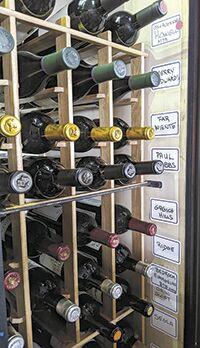
A cold case just past the bar holds by-the-glass wines at Rustic House Oyster Bar and Grill in downtown Los Altos.
Rustic House goes way beyond the “house wine” in its by-the-glass offerings, and Newlon prices many of its more distinguished glass wines to fit her principle that “I’d rather sell you more wine, at a lesser profit margin.” That means price-sensitive wine lovers may be able to try something rather fabulous while only investing on a glass-by-glass basis.
Rustic House is scheduled to host an evening of wine tasting and hors d’oevres in its new banquet space, the Rustic Room, 5:30-8 p.m. April 20. Newlon said they anticipate tasting more than 70 wines with representatives from local wineries, as well as offering handmade chocolates from Gourmet Works.
Homegrown favorites
Newlon looks for wines not available in grocery stores, visiting and researching wineries around the region and looking for opportunities – like wineries that had been sitting on a wine and willing to negotiate on wholesale price – that allow for by-the-glass pricing, which would typically hit a lower price ceiling than by-the-bottle options on the menu. But Rustic House also pours $35 glasses of a regional favorite, Silver Oak Alexander Valley Cabernet, offering diners a chance to taste a wine that runs at least $145 by the bottle in restaurants – this spring it even popped up on the happy hour menu for $19.
Local drinkers show their loyalty to the area’s wine regions. Paul Henry, wine buyer for Zanotto’s Market in Sunnyvale, said demand for local wineries has picked up in recent years, and that each individual market tailors its boutique offerings to local interests. Although they offer something from all the major wine regions of the world, recent favorites include Paso Robles and the Santa Lucia Highlands, in addition to well-known Napa and Sonoma wine country offerings.
“Some customers have very strong preferences and some are very new to wine,” Henry said.
Although there is overlap among tastes, he has first-hand observation that not all stereotypes totally miss the mark – the vast majority of people buying canned wines are under age 35.
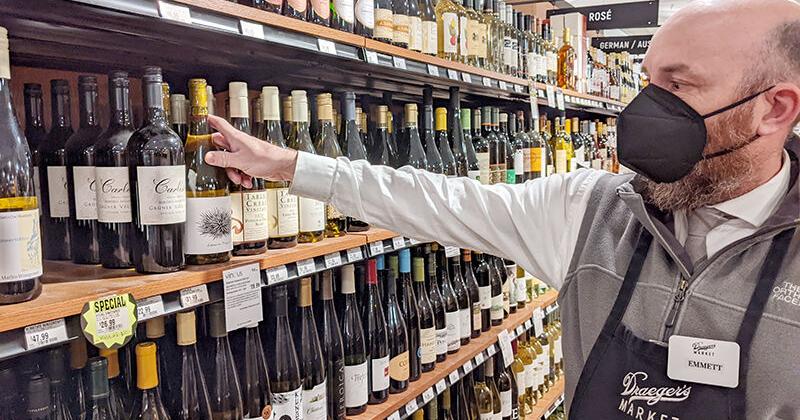
Draeger’s Markets have a wine director overseeing larger purchases, but individual wine department managers curate the collection at each store – so Emmett Welch at the Los Altos branch tailors some of his specialty items to new discoveries he’s excited to share with customers, and his local purchasing to local interests.
“We have customers all across the board, taste-wise – I’m fortunate people will spend $90 to try something,” Welch said.
He can bring back specialties unearthed on a tasting trip to Santa Barbara and pitch people on a lesser-known varietal that proves a perfect match. Strategies like a $10-off mailer makes taking a risk on an unfamiliar $30 bottle of wine tempting, and can bring out the fun of helping people try new things.
A few suggestions from Welch last week, for a novelty-seeking shopper – Stoipman Vineyard’s Roussane/Chardonnay blend ($28.99) and Lieu Dit’s unusual domestic muscadet, a Melon de Bourgogne ($23.99).
“I think everyone kind of has their own comfort zone, often it can lie in Napa Valley, Sonoma, (but) we have a client base that travels a lot, who go to Burgundy and Bourgogne, or people who come back and want to drink Chianti and remember their trip (to Italy),” Welch said.
Digital wine guide
Los Altos resident Philippe Tregon thinks younger, more technologically native wine drinkers are demonstrating their curiosity and desire to be more knowledgeable – during the pandemic, virtual wine tasting came into being as an enterprise – and restaurants would benefit if they gave consumers new ways to learn and interact.
Tregon is the vice president of business development for My Wine Guide, an app that offers personalized recommendations for wine consumers as they browse a bottle list. He has owned and operated restaurants in the area since 1995, and observed that online ordering, which grew so mightily during the pandemic, largely still fails to match the right wine to the right person. My Wine Guide helps users build a profile that characterizes their individual preferences, and applies those preferences to new opportunities, for instance unfamiliar Chilean or South African wines.
“How does the digital offering, beyond convenience and the notion of self-service, offer you personalization?” he asked. “(Given) the fingerprint of a wine that exists on a wine list, we’re going to do a match and tell you, ‘This wine meets 95% your characteristic wine experience.’ We’ll expose wine you never would have thought about, but they meet very closely what (you prefer.)”
Because most diners carry a phone, Tregon views an app as a natural extension of the printed menu, and a place to offer reactive promotions. My Wine Guide has been scraping wine lists from local and regional restaurants that share that information online, and looking to partner with restaurants on more in-depth pairing and promotions offerings.
Tregon thinks matching more diners with a wine they’re confident trying could have a profound financial impact for many small businesses.
Each of the wine buyers interviewed captured a balance between price sensitivity and openness to something new, given wine drinkers looking for a nudge to something new – and an assurance that they might like what they get.
